What are prime numbers?
Prime numbers are the building blocks of all other numbers. They have distinctive qualities that mathematicians get excited about. In this post, we will see what prime numbers are and discuss how cicadas exploit them to avoid predators and thrive!
Having seen factors in a previous post, we can define a prime number as one whose factors are only 1 and itself. To understand this, let’s consider this example:
Grandma Constance has 8 lollies in her handbag. Today is her birthday and she is hoping that her kids will bring their families over to celebrate it with her. Constance is fair and will share her 8 lollies equally among the grandchildren in attendance. The lollies can be shared equally among 1, 2, 4 or 8 grandchildren.
Grandma Priya is in the same situation. She has 7 lollies. Only if 1 or 7 grandchildren visit, will she be able to share all 7 lollies fairly! This is because 7 is a prime number: We cannot break it up into equal, smaller groups except for 7 groups of 1.

Why mathematicians love them
If you ask a mathematician why they like prime numbers, they are likely to answer: Because they are the building blocks of all numbers. Like letters come together to form words, so do primes come together to form other numbers, known as composite numbers.
What our notional mathematician is probably talking about here is the fundamental theorem of arithmetic: Any counting number greater than 1 is either prime or it can be written as the unique product of prime numbers. To add more precision and, hopefully, more clarity:
There is a unique string of prime numbers which, when multiplied together, produce every composite number. These prime numbers are known as the composite number’s prime factors. Table 1 below illustrates this.

How cicadas use primes to protect themselves
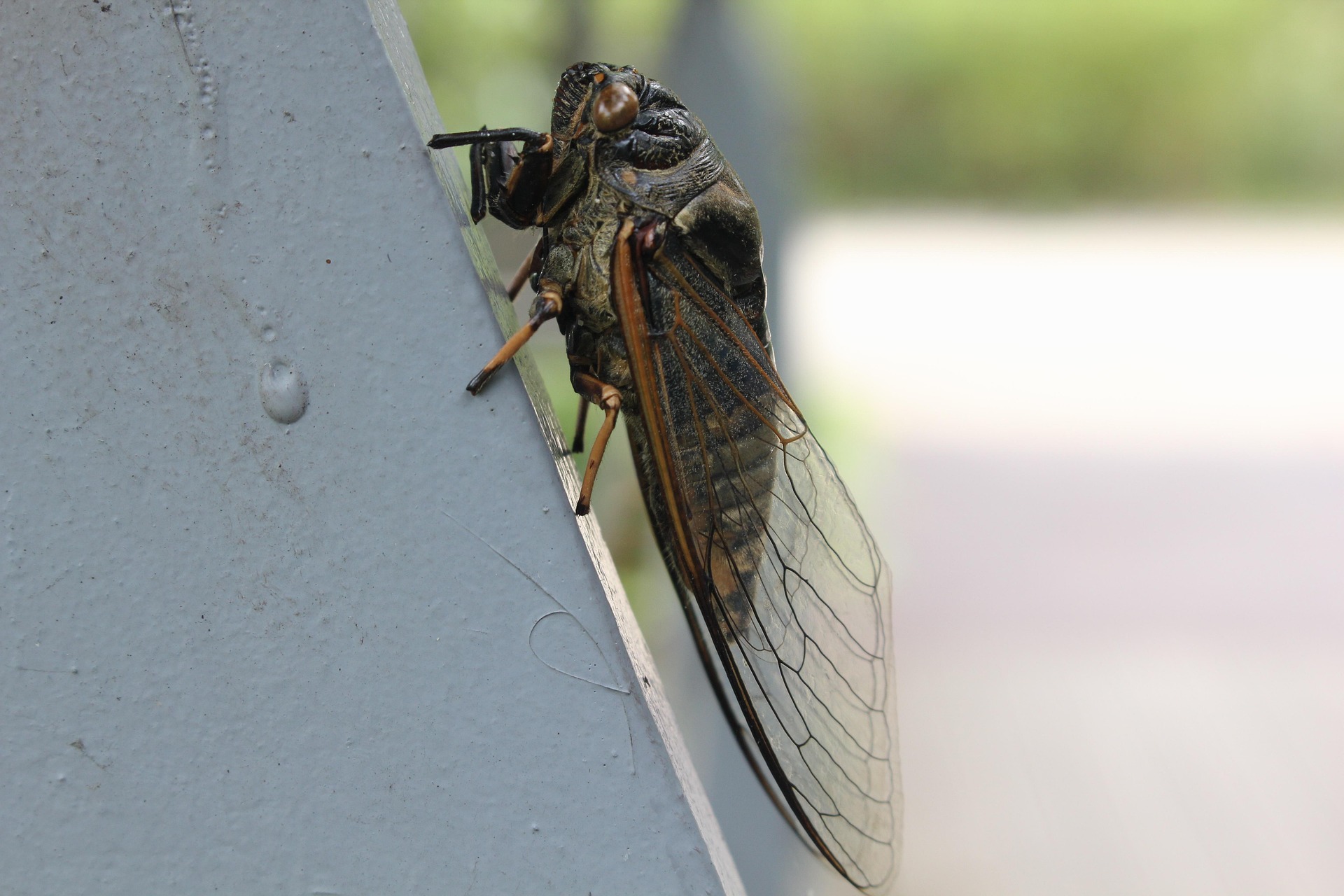
The southern cicada, named for its habitat in the southern states of the United States of America, lives in the ground and emerges to sing and breed every 13 years. In fact, there are a few species of cicadas that emerge on a cycle of years that is a prime number, mostly 13 or 17. So, is this just a mathematical curiosity or is it an advantage over emerging every 2, 4 or even 12 years?
Some predators of these cicadas also emerge according to a multi-year cycle. If the cicadas emerge every year, then they will be vulnerable to all of the predators. If they emerge every 12 years, they will be vulnerable to the 2-year, 3-year, 4-year and 6-year predators. These predators are indicated as P2, P3, P4, and P6 in Figure 1 below. A cicada that emerges every 13 years will only be caught by a 2-year every 26 years, by a 3-year predator every 39 years, and a 4-year predator every 52 years ().

The magnificent number 67
You have probably heard the kids say “6-7”, all while making a specific gesture with their hands. If you haven’t, then you are lucky indeed! Let’s combine those two digits and do a little exploration of the number 67.
Firstly, the number 67 itself is prime. More interesting, perhaps, is the fact that it can be written as the sum of prime numbers:
These are consecutive primes: If we wrote all of the primes between 7 and 19, they would be, precisely, 7, 11, 13, 17 and 19.
Furthermore, some pairs of these primes have special properties:
Twin Primes

Pairs of primes that are 2 apart, like 11 and 13 or 17 and 19, are known as twin primes.
Cousin Primes

Pairs of primes that are 4 apart, such as the two pairs in the above image, are known as cousin primes.
Sexy Primes?

Don’t take my word for it. Look it up to satisfy yourself that prime numbers that are 6 apart are known as sexy primes.
Interested in finding out more?
This Conversation article was where I learnt about Cicadas emerging after a prime number of years.
This TED Talk by Adam Spenser is also very interesting. Adam is one example of the many excellent Australian popularisers of mathematics.
Question for the reader
Why do you think there isn’t a name for a pair of primes that are 3 or 5 numbers apart? Let me know your answer in the comments.


Leave a Reply